
 Reports and Analytics
See the Numbers Behind Your Workforce, Payroll, and HR Operations
HR Khata turns everyday HR activity into reports and dashboards that are easier to review and act on. Attendance trends, payroll summaries, and workforce insights become visible without manually rebuilding data every month.
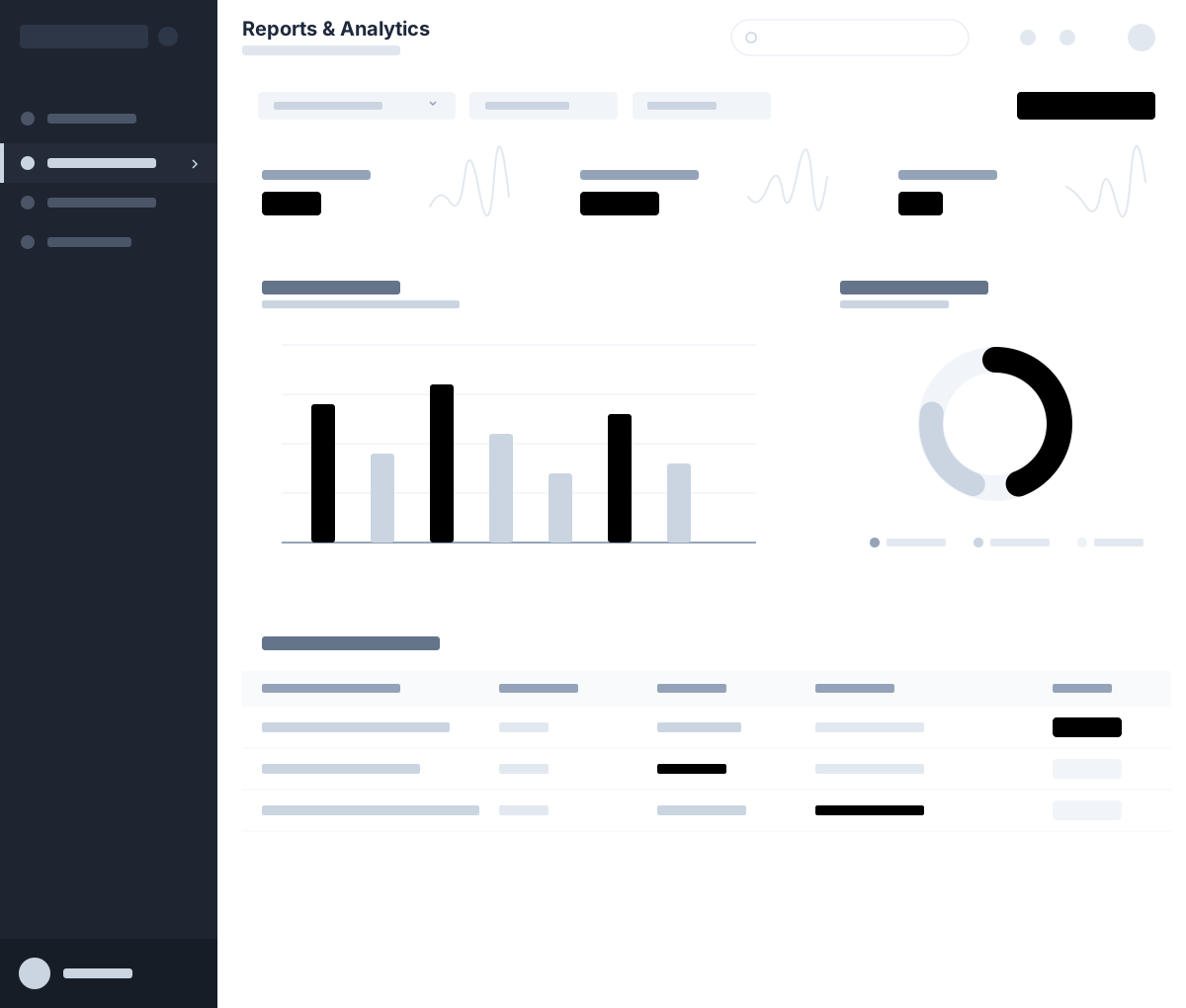
Reporting That Helps Teams Make Faster Decisions
Many HR teams spend too much time preparing reports manually. Data sits in separate files, different people keep their own versions, and leadership receives information only after someone has cleaned and merged everything. By then, the report is already late and often outdated.
Good reporting is not only about presenting numbers. It is about seeing patterns, identifying exceptions, and making decisions with confidence. When reporting is slow or inconsistent, managers lose the visibility they need to act early.
HR Khata’s Reports & Analytics module helps turn attendance, payroll, and employee data into practical outputs for HR teams, managers, and leadership. It makes everyday information more visible and far easier to use.
Features of Reports & Analytics
Reports & Analytics in HR Khata brings operational data together so teams can monitor workforce trends with less manual effort. It helps users move from record keeping to more informed management.
Attendance Reports
Attendance data becomes more useful when it can be reviewed in a structured way. HR Khata supports attendance reporting for present days, absences, lateness, overtime-related patterns, and exceptions. This helps managers identify operational issues early instead of only at payroll time.
Payroll Reports and Summaries
Payroll reports help HR and finance understand total earnings, deductions, tax, contributions, and net pay across periods. HR Khata supports payroll summaries that make monthly review easier and more organized. This improves control before and after payroll is finalized.
Employee and Workforce Dashboards
Leadership often needs quick visibility rather than a long spreadsheet. HR Khata can provide dashboard-style views of workforce data so important indicators are easier to scan. This supports faster review across headcount, movement, attendance, and payroll trends.
Branch and Department Filtering
Reports become more useful when they can be narrowed to the right group. HR Khata allows reporting by branch, department, employee category, or other filters so local managers and central teams can focus on the data that matters to them. This is particularly helpful for multi-location organizations.
Time-Period Comparison
One month’s report is useful, but comparison over time is often where insight begins. HR Khata helps teams review data across periods so changes in attendance, payroll cost, or workforce movement are easier to spot. This supports better trend analysis and planning.
Exception and Outlier Visibility
Managers often need to see the unusual cases quickly rather than scanning every row. HR Khata can help surface exceptions such as irregular attendance, unusual payroll changes, or pending approvals that need attention. This makes reporting more actionable.
Exportable Reports
Some reports need to be shared outside the system or used for further analysis. HR Khata supports export-ready reporting so teams can take structured data into external review, meetings, or audit preparation. This saves time compared with rebuilding reports manually.
Dashboards for HR and Management Roles
Different users need different views of the same organization. HR Khata can present dashboards tailored to HR teams, line managers, or leadership depending on what each role needs to monitor. This keeps reporting relevant and easier to use.
Connected Data Across HR Modules
Reports are stronger when they come from connected source data instead of isolated sheets. HR Khata links employee records, attendance, leave, payroll, and related modules so analytics can reflect a more complete picture. This reduces reconciliation effort before reporting.
Better Decision Support
Reporting matters most when it supports action. HR Khata helps teams review operational patterns and make better decisions around staffing, payroll control, attendance issues, and workforce planning. Clearer information leads to faster and more confident follow-up.
FAQs
Frequently Asked Questions
Get Started Smarter way to handle HR, attendance, and payroll operations
HR Khata automates workforce management, reduces manual HR work, and improves accuracy across attendance, HR, and payroll in one simple system.
 Your Complete HR & Attendance Solution
 Download HR Khata App – Manage HR & Attendance Anytime, Anywhere
Simplify your daily HR operations with HR Khata. Track employee attendance, manage leave, payroll, and employee records effortlessly. Download the app on Android and iOS to manage your workforce anytime, anywhere.